Vira

Designing a wellness experience around emotional safety, autonomy, and reflection rather than performance.

A mobile app for people who find tracking stressful. Researched, tested with 15 people, and built as a working React Native app.

Role
Product Design · UX Research · UX/UI · Development
Tools
Figma · React Native · Firebase
Duration
Capstone Project, 2024–2025

The Problem

Wellness apps often turn wellbeing into a score.

  • Calorie counts
  • Weigh-ins
  • Streaks
  • Daily goals
  • Comparison

Tracking can build awareness. But for people dealing with anxiety, depression, eating disorders or low motivation, the same mechanics can create pressure, guilt and a sense of failure.

The tools meant to promote wellness can sometimes undermine the mental health they are trying to support.

The design questionHow might we design a wellness experience that encourages healthier habits without turning wellbeing into another performance metric?

Research

Secondary research: a literature review on self-tracking and eating-disorder risk, an analysis of how popular apps engage their users, and behavioral psychology and ethical-UX guidance. It produced four insights that shaped everything after.

INSIGHT 01

Tracking builds awareness, and can build pressure.

Logging can make people more mindful, but an emphasis on calorie counting and weight tracking can create pressure, anxiety and guilt. Use of weight and fitness management apps has been correlated with disordered eating behaviors.

Eikey, 2021 · Huang et al., 2022
INSIGHT 02

Streaks and goals can feel like a test you’re failing.

Streaks and badges can encourage compulsive behavior, discourage rest days, and push people to carry on through illness to keep a number going.

Feature analysis · Landsverk, 2023 · Cherry, 2020

INSIGHT 03

For vulnerable users, emotional impact is a requirement.

Apps that focus on emotional support and understanding tend to support lasting improvements. Usability alone isn’t enough when the user may be struggling.

Eikey, 2021

INSIGHT 04

Control is part of wellbeing.

Self-Determination Theory points to autonomy, competence and relatedness as basic needs. For apps, that means letting people make their own choices instead of following strict rules.

Deci & Ryan, 1985

MyFitnessPalCalorie and exercise tracking, with graphs.Strict counting can cause problems for users at risk of anxiety, perfectionism or eating disorders.
NoomFood logging, color-coded foods, CBT-based lessons and a virtual coach.Criticized for promoting restrictive eating through calorie limits and food labels.
Headspace & CalmMeditation, sleep and stress tools.A contrast: progress is consistency and subjective mood, not calorie-style metrics.
FitbitSteps, heart rate and sleep, with daily targets and badges.Targets and badges can lead to hyper-focus on quantitative achievement.
The three research questions
  1. What design strategies in current wellness apps are most likely to reinforce disordered behaviors or harm mental health?
  2. How can behavioral psychology and ethical UX principles inform the development of a more supportive wellness app experience?
  3. In what ways can digital tools encourage sustainable self-care without relying on performance or perfectionism?

Design Principles

Three principles turned the research into constraints I could design against.

Emotional safety

Design for how users feel, not just what they accomplish.

In the product

A soft, rounded interface with warm, non-directive copy. Crisis resources are one tap away (“Get Immediate Help”). The AI tool carries explicit boundaries.

Autonomy

Users should control how and when they engage with the product.

In the product

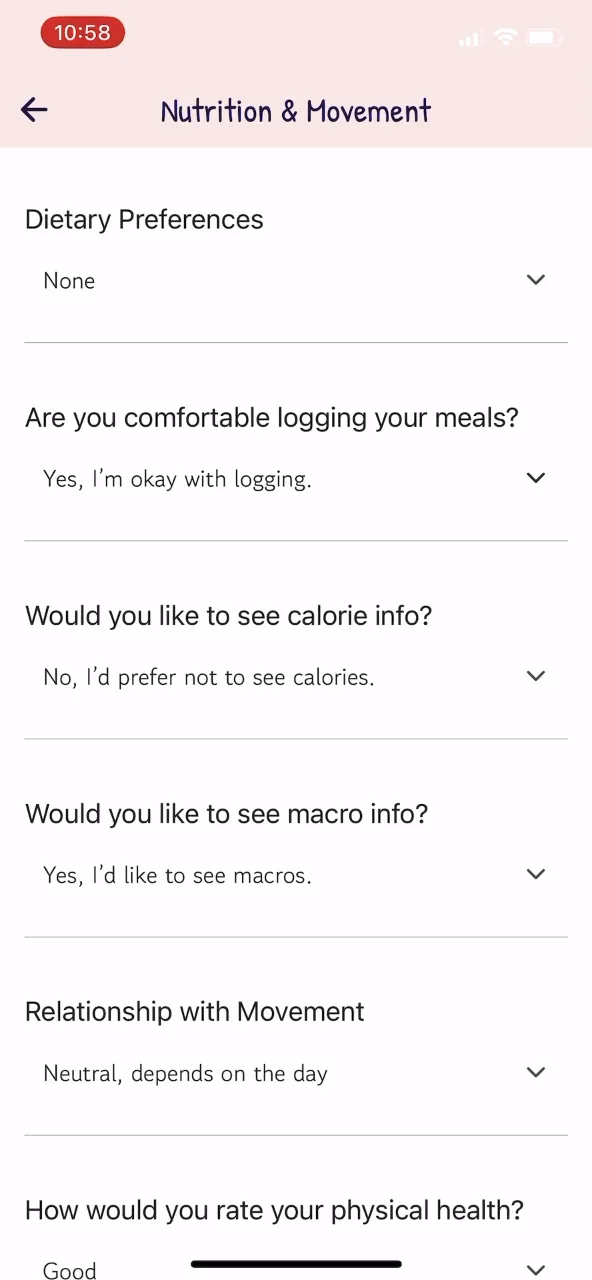
Users choose whether to see calorie and macro info, which widgets to pin, how the app supports them from onboarding, and whether to use the AI tool at all.

Reflection over performance

Encourage awareness and sustainable self-care rather than optimization.

In the product

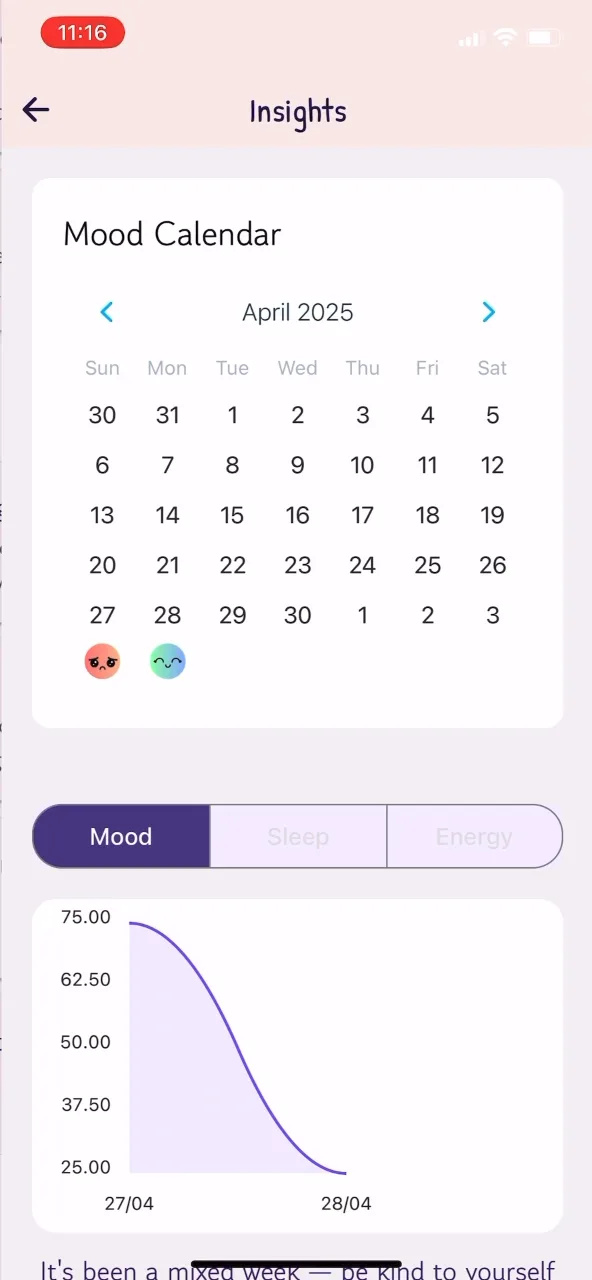
Meal reflections capture fullness and mood. Insights show mood, sleep and energy in gentle language. Optional prompts help people notice non-numerical progress.

Meet Vira

This is the working app, recorded on a phone. Pick a chapter to jump to it.

I didn’t just design this. I built a working product.

From Research to Design

Research / problem

Calorie counts can lead to fixation and guilt, especially for people with eating disorders.

Design decision

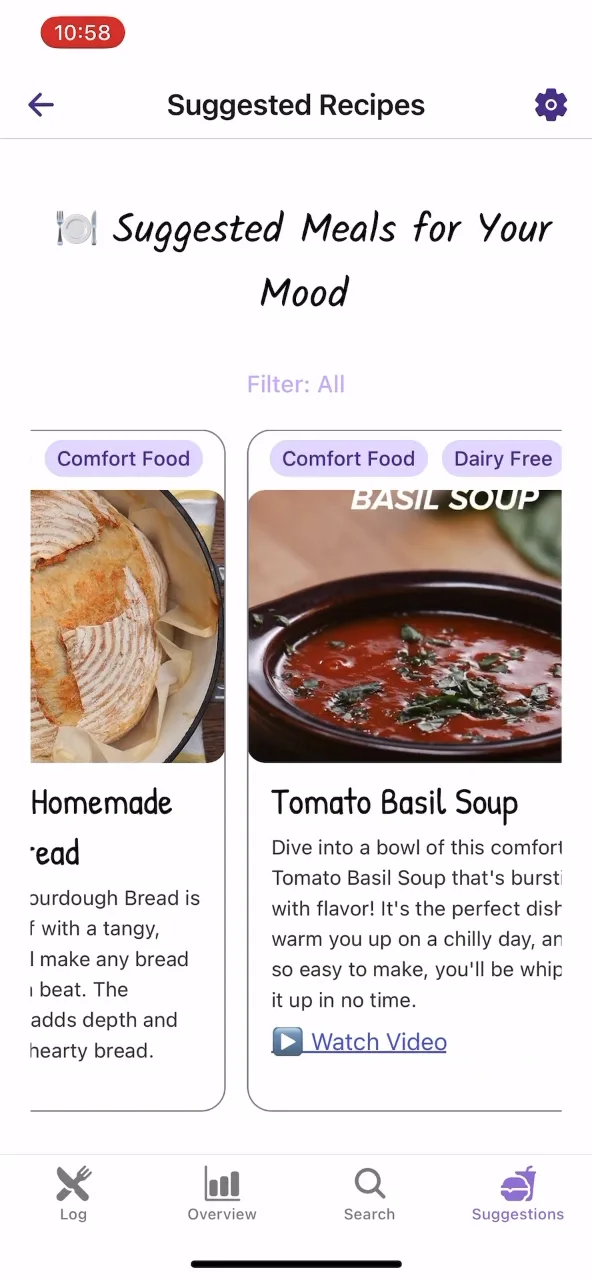
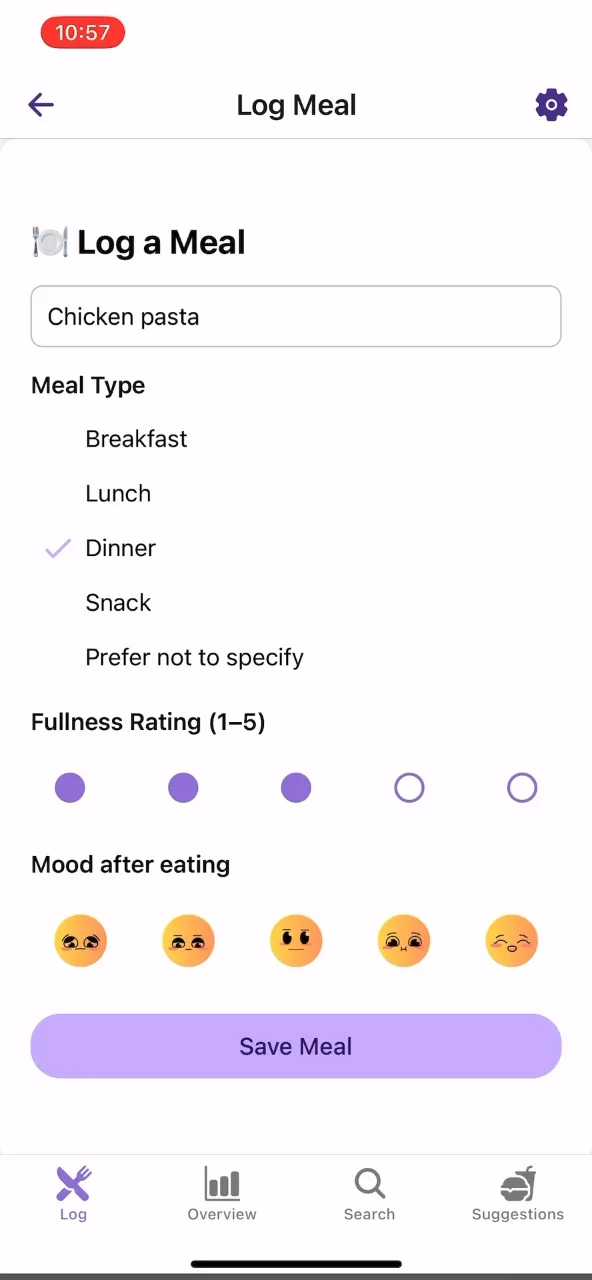
Track how food feels, not only what it is: qualitative tracking such as hunger cues and emotional check-ins. Numbers become a choice.

In the product

Log Meal asks for fullness (1–5) and mood after eating. Preferences ask whether to see calorie or macro info at all.

Log Meal screen with meal type, a 1 to 5 fullness rating and a mood after eating selector
Preferences screen asking whether the user wants to see calorie info, with the option to decline
Research / problem

Rigid metrics and streaks can make people feel they are failing when they can’t keep them up.

Design decision

Flexible reflection and user-controlled engagement. Progress shown in gentle language, not as a score to defend.

In the product

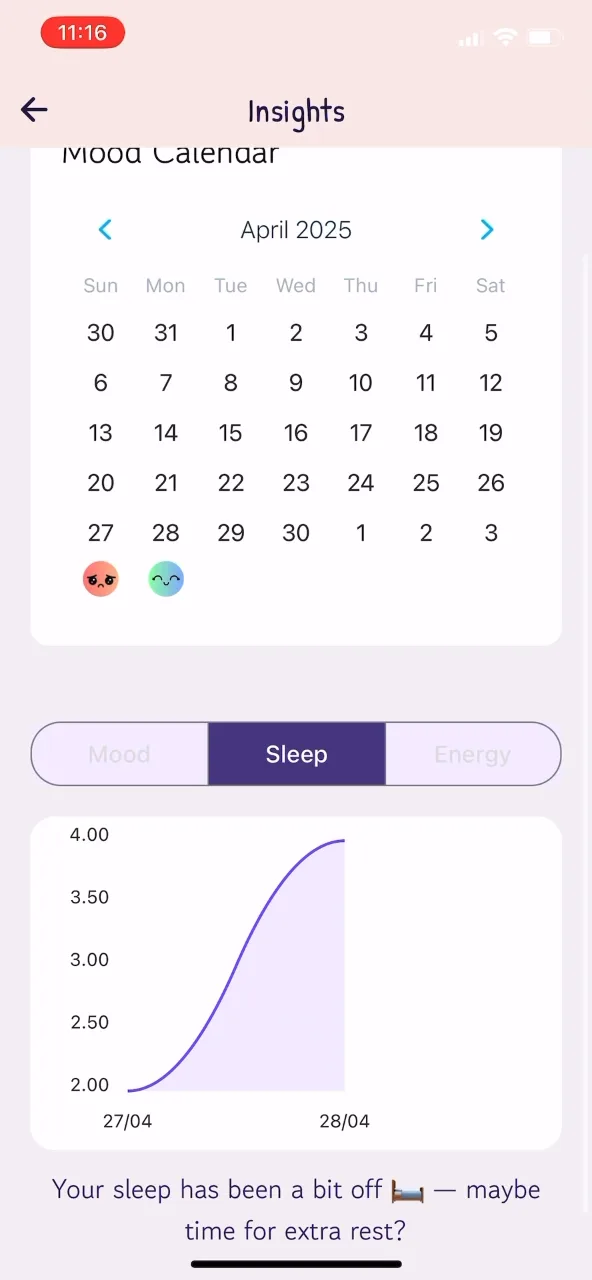
Insights: a mood calendar with mood, sleep and energy trends, and messages like “Your sleep has been a bit off — maybe time for extra rest?”

Insights screen with a mood calendar and a mood trend chart
Insights sleep trend with the message: Your sleep has been a bit off, maybe time for extra rest
Research / problem

People have different comfort levels with support, and control is part of wellbeing.

Design decision

Customization and choice: users shape their own Home, set their own goals, and choose how the app supports them.

In the product

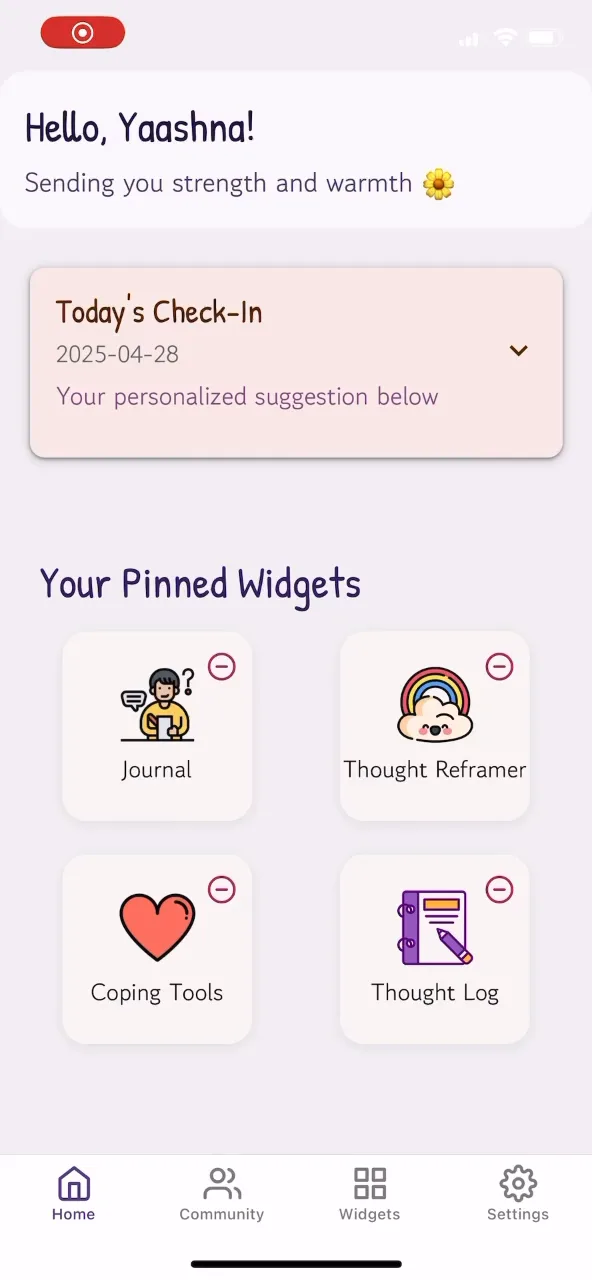
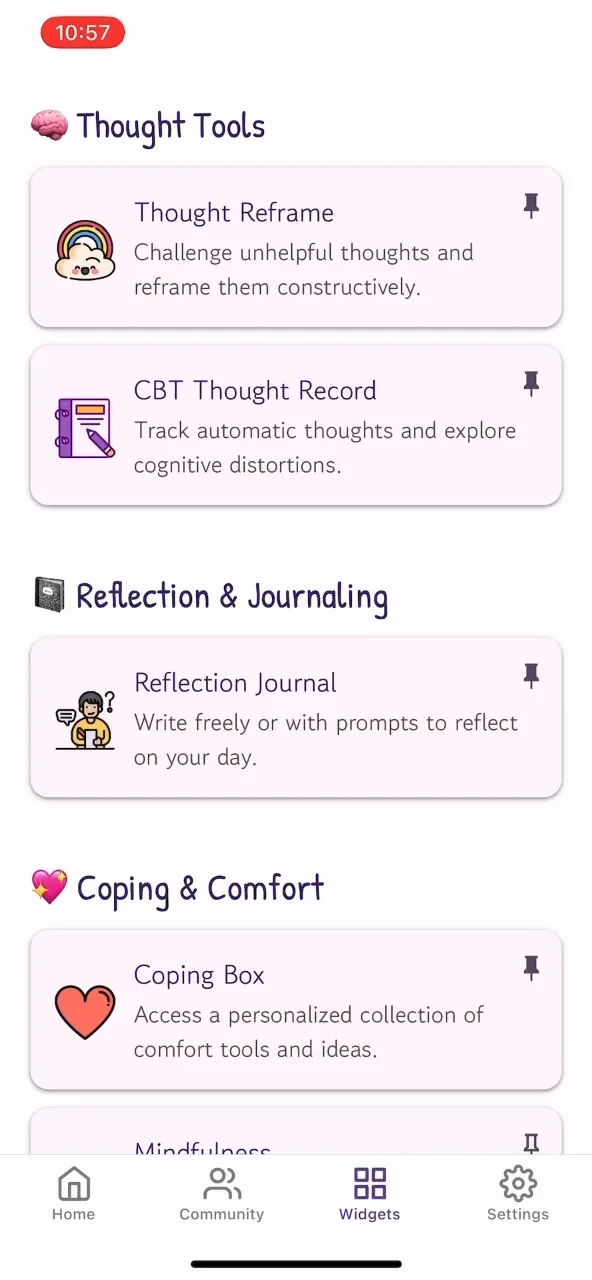
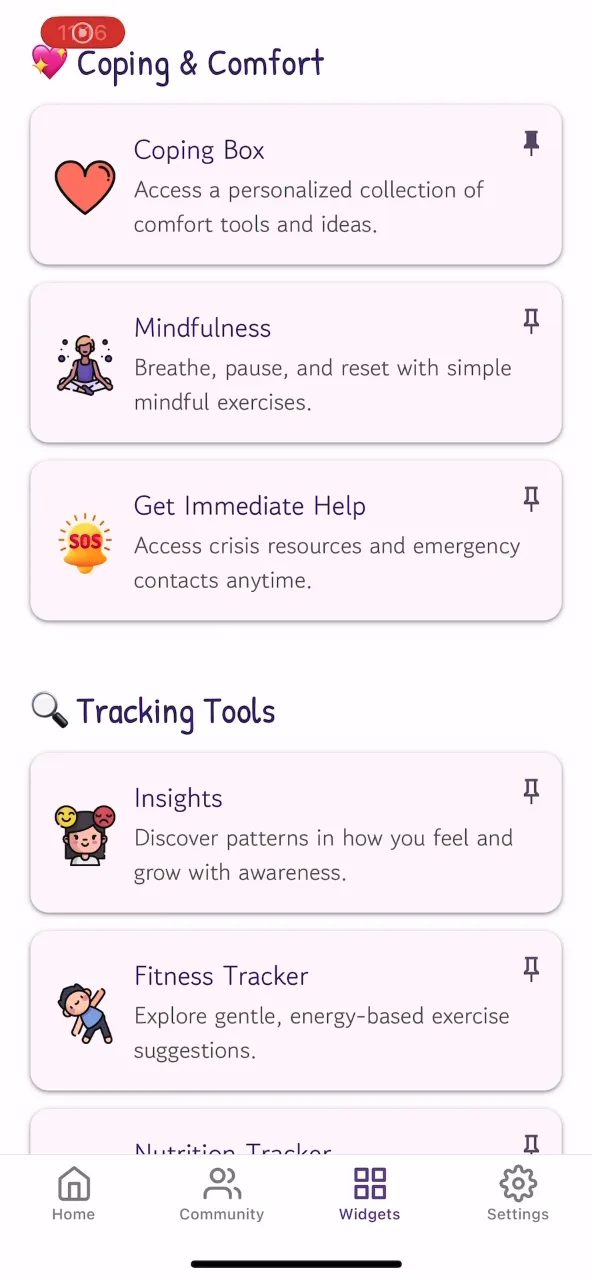
Pinned widgets on Home, and a widget library where every tool can be pinned or left alone.

Home screen with a greeting, a daily check-in and four pinned widgets: Journal, Thought Reframer, Coping Tools and Thought Log
Widget library listing Thought Reframe, CBT Thought Record, Reflection Journal and Coping Box, each with a pin
Research / problem

Traditional thought records can feel clinical, rigid or overwhelming.

Design decision

Break them into smaller, optional prompts, in warmer, non-directive language.

In the product

Guided steps for identifying a trigger, describing a feeling, and gently exploring a more balanced thought. See the next section.

Research / problem

Community features can offer support, but also promote comparison and spread triggering content.

Design decision

Peer encouragement over performance metrics. Light moderation, content filters, reporting tools and clear community guidelines.

In the product

A Community space in the main navigation.

Translating Therapy Tools

How do you turn tools from clinical, paper-based settings into a self-guided experience that doesn’t feel clinical or overwhelming?

I reviewed a broad range of CBT-based tools and chose three. Each is backed by clinical evidence, and each favors self-awareness over performance or correction.

Thought records

Teach users to challenge distorted thinking and reframe negative self-talk. In Vira the process is bite-sized: identify a trigger, describe a feeling, gently explore a more balanced thought.

Coping box

A personal resource to return to in a hard moment. Designed as a customizable space for notes, affirmations, images or calming ideas, to give it a personal, comforting tone.

Thought logging

A lighter-touch tool for tracking internal dialogue. It builds awareness without judgment.

Interaction
One small step at a time, from trigger to feeling to a balanced thought.
Language
Warm and non-directive. Suggestions, not instructions.
Pacing
Bite-sized prompts, so nothing arrives as a wall of questions.
Optionality
Prompts are optional. There is no wrong way to do it.
Emotional tone
Soft visual cues. Each tool should feel like a conversation, not a checklist.
Widget library showing Thought Reframe, CBT Thought Record, Reflection Journal and Coping Box

In the app these appear as Thought Reframe, CBT Thought Record, Reflection Journal and Coping Box, each a widget the user can pin to Home or leave alone.

Reflection over correction: inviting people to slow down and notice patterns, without the pressure to “fix”.

User Testing

15Participants with depression, anxiety or eating disorders
~1 wkUsing a prototype of Vira
InterviewsAfter use, on emotional response, usability and suggestions

What worked

  • People felt emotionally safe. They said they didn’t feel judged.
  • Not being forced to count calories or track streaks helped them avoid guilt and comparison, with the option to turn those features on.
  • Users called the app “calming”, “non-judgmental” and “soothing to open”.
  • Guided journaling was well received, especially because prompts read as gentle suggestions, not strict instructions.
“This is the first time I’ve used a wellness app and didn’t feel worse about myself afterward.”Participant

What didn’t

  • Some new users were unsure how to use the app without goals or progress markers. They weren’t sure what “progress” looked like.
  • Early users wanted onboarding to feel more personal and relevant from the start.
  • The conversational AI tool was comforting to many, but raised ethical questions (next section).

Feedback → design change

Users weren’t sure what progress meant without traditional metrics.

I added optional reflection prompts that help users recognize non-numerical signs of growth, like better sleep, less anxiety or more emotional awareness, and define success on their own terms.

Users wanted onboarding to feel more personal.

I redesigned onboarding so users customize how the app supports them: gentle mood tracking, journaling prompts, or reminder-based encouragement.

The AI reframing tool felt like support, which risked being mistaken for therapy.

I added disclaimers, a choice of self-guided or AI-supported tools, validation-first responses and a resource list.

The AI Dilemma

How do you offer supportive AI without making people believe they’re receiving therapy?

The thought-reframing tool had two modes. Testers called the conversational one “surprisingly comforting” and “like texting someone who listens”. That was exactly the problem: I had to weigh the emotional benefit of real-time support against the risk of users mistaking the AI for therapeutic care.

Manual

Complete a guided thought record independently.

Conversational AI

Reframe a thought by talking with an agent that mimics the tone of a supportive mental health coach.

The boundaries I designed

  1. Clear disclaimers that the AI is not a substitute for therapy.
  2. The user chooses between self-guided and AI-supported tools, based on comfort.
  3. Responses prioritize validation and emotional safety, and avoid giving advice.
  4. A mental health resource list inside the app, for anyone who may need professional help.

The goal was a wellness companion, not a therapist: support that empowers people without creating dependency or false expectations.

Building the Product

I design what I build, and I build what I design.

Figma

Wireframes and UI/UX exploration, aiming for a soft, calming interface that doesn’t overwhelm.

React Native

The working prototype, cross-platform across iOS and Android.

Firebase

Secure authentication and private data storage.

  • Private by default. Journaling and mood data is stored client-side by default. Cloud backup needs explicit user consent.
  • Transparent about data, with non-triggering UI copy and customizable experiences.
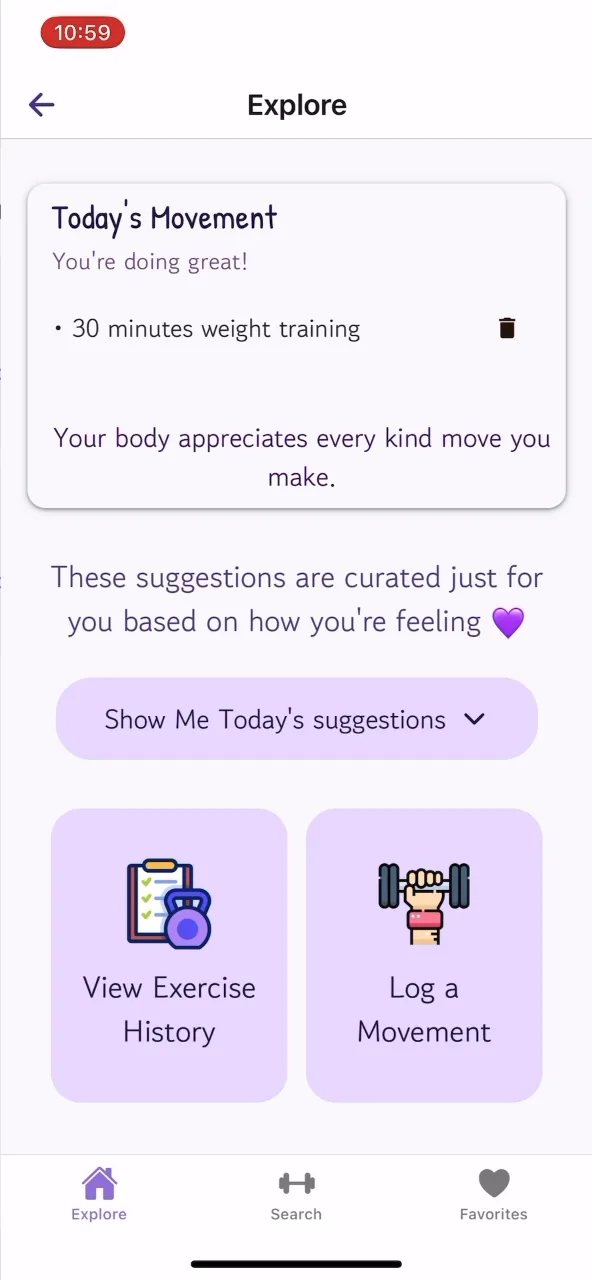
  • Core features built: Mood Tracking, Meal Reflections, Resource Library, Gentle Routines and Support Access.
  • Process: personas from research on depression and ED experiences → low- and high-fidelity prototypes in Figma → a working build → testing with a small user group.
  • Figma
  • React Native
  • Expo
  • Firebase
  • Styled Components
  • Jest
View the code on GitHub →

Final Experience

Presentation

IMA Capstone Week, Spring 2025. My original presentation of the project.

Watch on Vimeo →

Reflection

  • Designing for vulnerable users

    Empathy had to be built into every stage, not added at the end. It shaped copy, customization and safety features alongside the interface.

  • Research into decisions

    Choosing three CBT tools meant choosing reflection over correction, and every feature had to answer to that.

  • Autonomy needs structure

    Removing metrics felt right, but it left some new users without a sense of direction. The answer wasn’t to bring the numbers back. It was optional prompts and letting people define success themselves.

  • Knowing where AI should stop

    The most valuable AI decisions were boundaries: disclaimers, choice, validation over advice, and a path to professional help.

  • Testing my assumptions

    A week of real use with 15 people surfaced problems a design review wouldn’t have, especially around onboarding and progress.

  • Building, not just mocking up

    Shipping a working app meant the design was tested as a product, with real data, real states and real consequences for privacy.

Vira is a wellness and self-reflection tool. It is not a medical device, does not diagnose or treat any condition, and is not a substitute for professional care.