HackNYU 2025 · Interactive Media Track Winner
ZenPose
AI-powered real-time pose feedback for safer, smarter yoga.
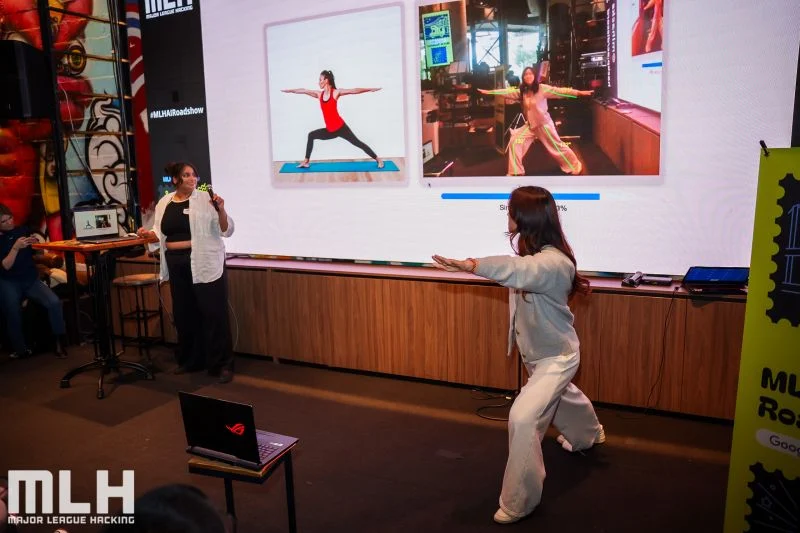
Live demo · MLH AI Roadshow, NYC
The Problem
Zoom workouts and online yoga are everywhere. They remove the one person who’d normally watch and correct your form.
- You follow an online yoga class or workout.
- You perform a pose.
- No instructor is there to correct you.
- Your form may be off, and you don’t know.
- Small misalignments repeat, and can add up to long-term injury.
What if AI could guide your form like a yoga coach?
The Idea
ZenPose is a web app for safer, smarter yoga.
A camera watches your pose. The system checks your form, waits until you’re steady, and gives you feedback straight away. Get it right and you earn a point, plus a snapshot of the moment.

- You hold a pose
- ZenPose tracks your body
- It checks your form
- It waits for a steady pose
- You get feedback
- Correct: a point + a snapshot
The Experience
- 1The target. A reference photo of the pose to match.
- 2You, tracked. The live camera feed with your body’s joints followed.
- 3Progress. A bar fills as you hold the pose, with a running score.
- Pose
You take the pose shown in the reference photo.
Reference image - Detect
The camera feed becomes a set of tracked joints.
BlazePose - Evaluate
Joint angles are compared with the reference, relative to your hips.
Custom math - Stabilize
A buffer waits for a steady pose before anything is scored.
Smoothing buffer - Feedback
A point and a snapshot for a correct pose, plus encouragement or an adjustment.
Gemini API
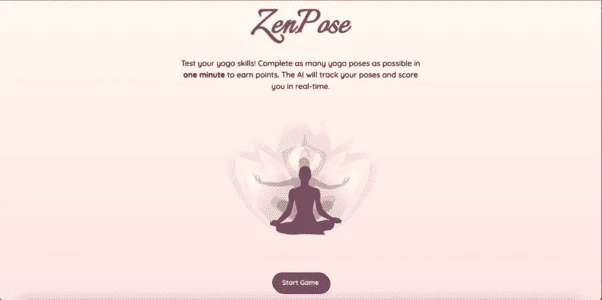
The start screen frames it as a one-minute challenge.
Making computer vision behave like a usable product
The model could find a body. It couldn’t reliably tell whether your body was right. Pose detection misclassified people because everyone stands, and is built, differently.
One pose, three bodies. Against a fixed reference, each is “wrong” in a different way.
Illustration of the approach, not recorded data. Dashed = reference pose.
- Started withFixed-position model
Compared people to a reference at fixed coordinates. It didn’t generalize across users.
- ThenHip-anchored positioning
Re-centered each pose on the person’s own hips, so position in the frame stopped mattering.
- ThenRelative joint angles
Judged the relationships between joints rather than absolute coordinates.
- FinallyStability buffer
Only scored steady poses, which smoothed out flicker between frames.
For feedback to feel trustworthy, the technology had to be reliable first. That was the real design problem.
The AI Experience
Not “lots of AI”. Three different jobs, each handing off to the next, in a loop with the person at the centre.
- YouMovement
You hold the pose.
- BlazePoseComputer vision
Finds your joints in the camera image.
- Custom mathEvaluation
Are the angles right, and is the pose steady?
- Gemini APIAI feedback
Compares with a reference image and answers in plain language.
- YouResponse
Encouragement, or an adjustment to try.
↺ And back into the next attempt
Sees
Computer vision identifies what you’re doing.
Decides
Custom evaluation determines whether the pose is correct and stable.
Says
Generative AI turns that result into feedback a person can act on.
Rapid Prototyping
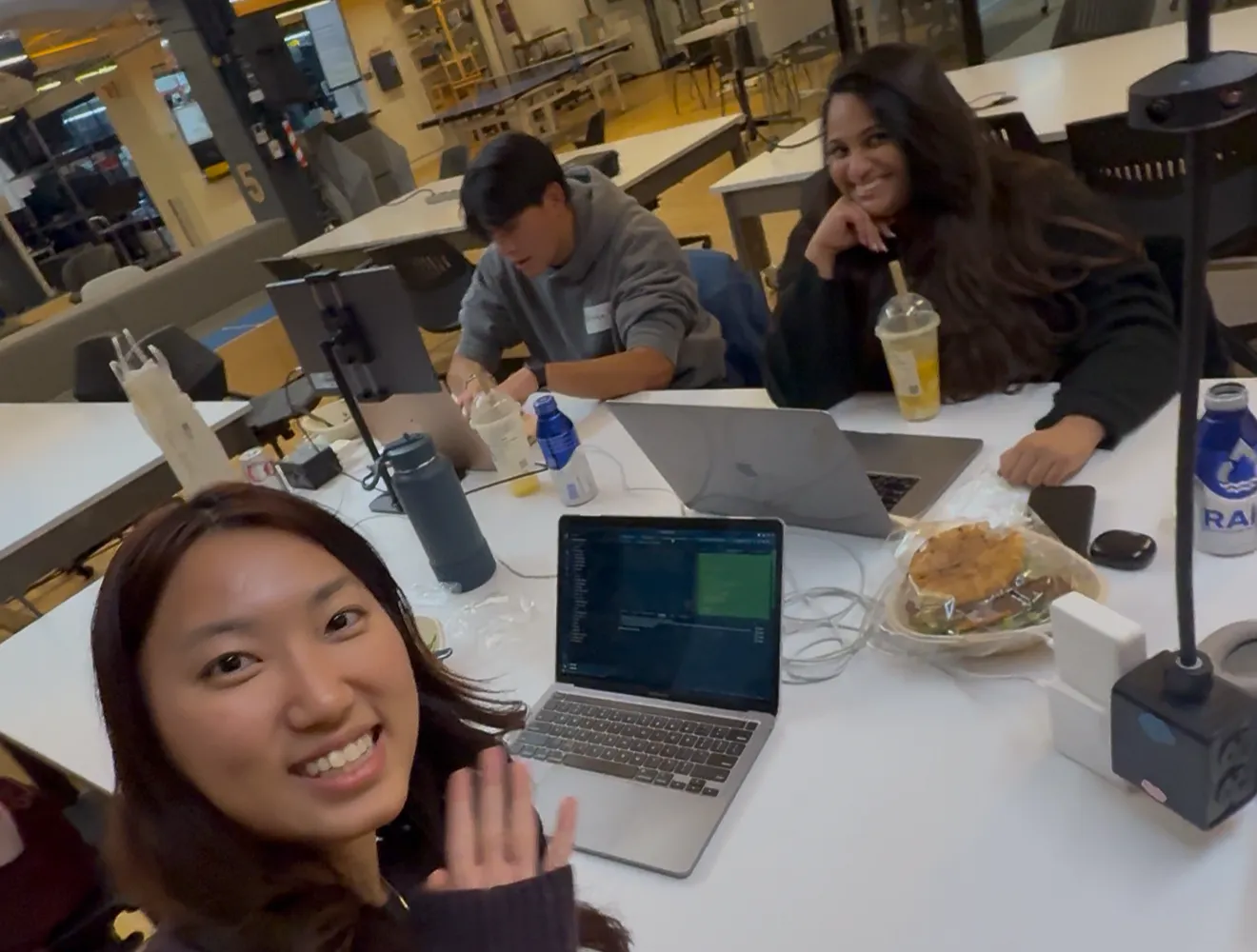
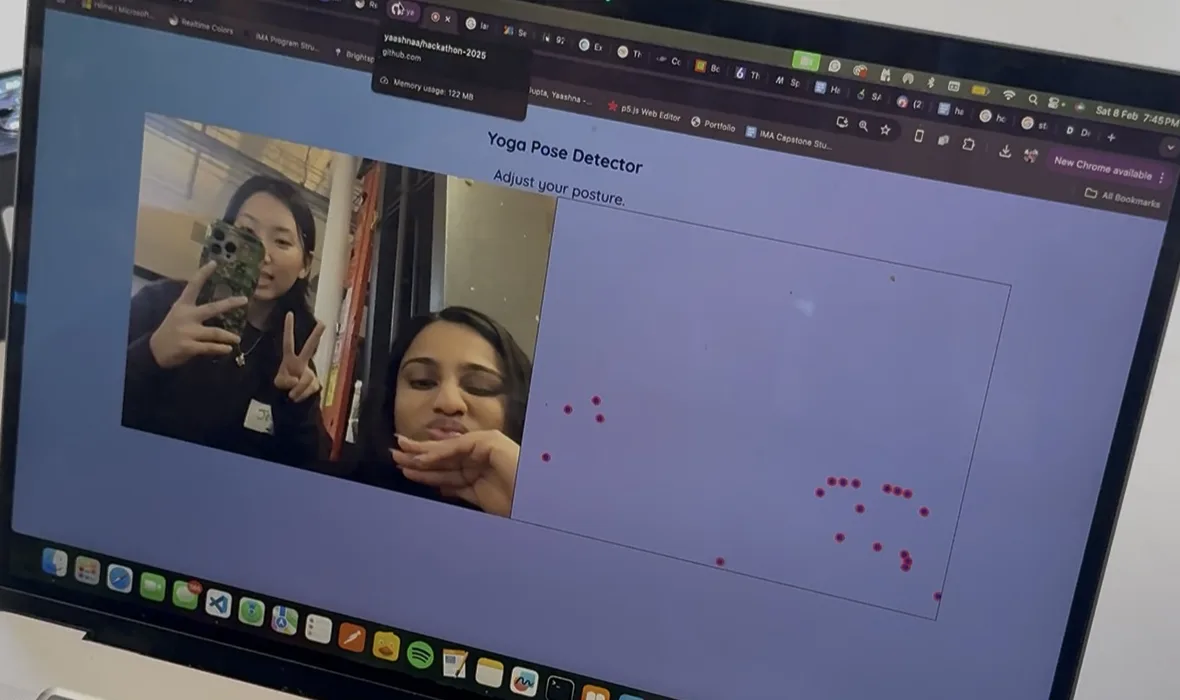
Looking back, what the constraint pushed us toward
- Get the core loop working first: a pose in, feedback out.
- Spend attention on the hardest problem we hit, reliable detection.
- Use existing tools, a pre-trained pose model and a hosted AI model, instead of building from scratch.
- Even use AI to generate reference pose data, to keep moving.
- Keep one clear experience: hold a pose, get feedback, earn a point.
Presented live
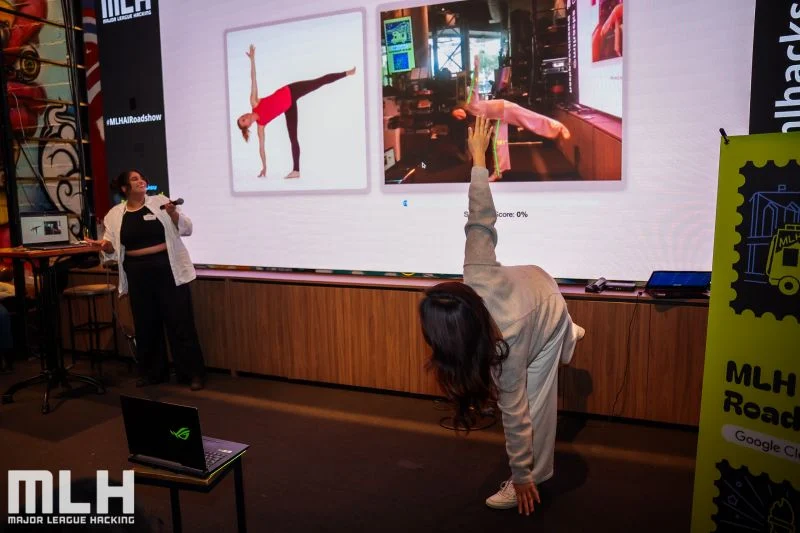
1 of 3teams selected to demo live at the MLH AI Roadshow in NYC
After building ZenPose at HackNYU, we presented the project through the MLH Roadshow, demonstrating the AI-driven pose feedback system live. We were selected out of thousands of Gemini-powered hacks to be one of three teams to demo on stage.
Result
Interactive Media Track Winner
HackNYU 2025
- Invited by Major League Hacking to present at the MLH AI Roadshow in NYC.From the original post
- One of three teams selected to demo live, out of thousands of Gemini-powered hacks.From the original post
- Detection accuracy improved by 40%.From my resume
- Our first hackathon, and a working product at the end of it.HackNYU 2025
What we learned
AI wasn’t just part of the product. It became part of the way we built it.
Learning on the job
None of us had worked with AI before. We learned the tools by building with them.
AI as a collaborator
It helped us learn, debug and build faster, and even generate reference pose data.
Judgment stays human
We used AI to amplify our decisions about the experience, not to replace them.
You don’t need to be an expert to build something real.From our presentation
What’s next
Directions we’ve talked about. None of these are built yet.
- More yoga poses
- Customizable routines
- Personalized feedback over time
- Real-time voice coaching
- Continued improvements to detection